

Language often introduces words that feel confusing at first. One such word is Sagerne, which has recently gained attention online. Many people assume it is a brand, a technical term, or something complex. In reality, Sagerne is a simple but meaningful word from the Danish language.
Understanding it helps you interpret conversations, translations, and content more accurately. It also shows how language works beyond direct translation. When you explore its meaning deeply, you realize it is not just a word. It is a concept tied to clarity, context, and shared understanding.
What Does Sagerne Mean?
Sagerne generally translates to “the cases,” “the matters,” or “the issues.” However, this translation alone does not fully explain its meaning. The most important feature of the word is that it always refers to something specific and already known in a conversation.
Unlike general terms, It points to clearly identified topics. Both the speaker and listener understand what is being discussed. This makes communication more precise. Instead of being vague, the word creates focus and removes confusion in both formal and informal situations.
Origin and Linguistic Background of Sagerne
Sagerne comes from Danish, a North Germanic language closely related to Norwegian and Swedish. These languages share similar grammar patterns, especially in how they handle nouns and definiteness.
The word is built from “sag,” meaning a case or matter. It changes to “sager” for plural, and “Sagerne” for definite plural. This structure shows how Danish attaches meaning directly to the word instead of using separate articles. It reflects a compact and efficient linguistic system.
Why Sagerne Means “The Cases” Not Just Cases
A common misunderstanding is treating Sagerne as a general plural noun. In reality, it always refers to specific matters that are already known.
This distinction is important. In English, “cases” can mean anything. But “the cases” refers to identified issues. It always carries this definite meaning. It ensures clarity by pointing to something shared between speakers. This makes it especially useful in situations where precision is important.
How Sagerne Is Used in Real Life Contexts
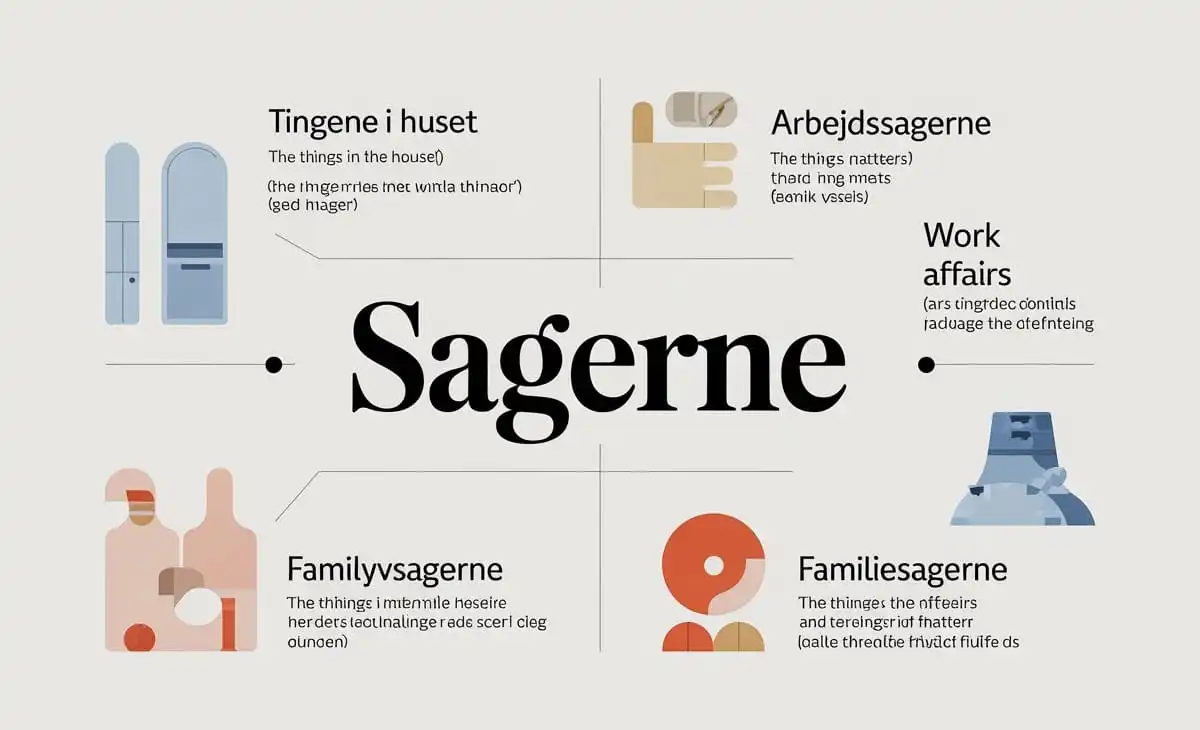
Sagerne is a flexible word used in different environments. Its meaning changes slightly depending on context, but the core idea remains the same.
- In legal settings, it refers to official cases or investigations.
- In workplaces, it can mean tasks or responsibilities.
- In everyday life, it may refer to personal matters or issues.
This adaptability makes it a practical and widely used term across different situations.
Legal and Professional Use of Sagerne
In legal and administrative contexts, Sagerne is often used to describe formal cases or matters under review. These could include court cases, investigations, or official files that require attention.
The word carries a structured and serious tone in these environments. It helps professionals communicate clearly when dealing with multiple cases. By using it, they ensure everyone understands exactly which matters are being discussed without confusion or repetition.
Sagerne in Everyday Conversations
Outside formal settings, Sagerne becomes more casual and flexible. People use it to describe tasks, responsibilities, or personal matters that need attention.
For example, someone might say they will handle it over the weekend. This simply means they will take care of known tasks or issues. The word adapts easily to daily life, making communication smoother and more natural in informal situations.
Cultural and Historical Context of Sagerne
The word Sagerne has deeper cultural roots connected to Scandinavian traditions. Its root “sag” is linked to the concept of “saga,” which refers to stories in Norse history.
This connection suggests that cases or matters are seen as part of a larger narrative. Each issue has context, history, and meaning. This cultural perspective adds depth to the word. It shows that language is not just about communication, but also about how people understand the world.
Modern Interpretations of Sagerne
In modern digital content, Sagerne is sometimes used in broader ways. Some writers connect it to ideas like organization, problem-solving, and structured thinking.
While these interpretations are not strictly linguistic, they show how language evolves online. Words take on new meanings depending on context. This flexibility makes it more interesting and relevant in today’s digital environment.
Why Sagerne Is Gaining Popularity Online
The growing interest in Sagerne comes from several factors:
- Its unfamiliar look attracts curiosity
- It appears in subtitles and translations
- It has multiple meanings depending on context
- Global content exposes users to new languages
- People search for deeper explanations
This combination has increased its visibility and made it a trending term in online searches.
Common Mistakes People Make
Many people misunderstand Sagerne because they focus only on direct translation.
- Thinking it is a brand or company
- Assuming it is only legal terminology
- Ignoring context while translating
- Using the same meaning in every situation
- Not recognizing its definite nature
Avoiding these mistakes helps in understanding the word correctly and using it effectively.
Real Case Study: Understanding Through Context
A student learning Danish encountered the word Sagerne in a news article. At first, they translated it simply as “cases,” which did not make sense in context.
After reviewing the full sentence, they realized it referred to specific ongoing issues being discussed. This changed their understanding completely. The experience showed that context matters more than direct translation when learning new words.
Why Context Matters More Than Translation
Sagerne cannot be understood properly without context. Direct translation often leads to confusion because the meaning changes based on the situation.
The correct approach is to read the full sentence and identify the topic. Once the context is clear, the meaning becomes obvious. This method improves accuracy and helps avoid common mistakes when interpreting foreign words.
Conclusion
Sagerne may seem like a complex word at first, but it becomes simple once you understand its structure and usage. It generally means “the cases,” “the matters,” or “the issues,” depending on context.
More importantly, It teaches an important lesson about language. Meaning is not just about words. It is about context, clarity, and shared understanding. By learning how to interpret it correctly, you also improve your overall communication skills across languages.
FAQs
What does Sagerne mean in English?
Sagerne means “the cases,” “the matters,” or “the issues.” The exact meaning depends on context.
Is Sagerne only used in legal situations?
No, it is used in legal, professional, and everyday conversations. Its meaning adapts based on context.
Why is Sagerne confusing for beginners?
Because it has multiple meanings and depends on context. Direct translation often causes confusion.
How can I understand Sagerne easily?
Focus on the full sentence and identify the topic. Context will guide the correct meaning.
Can Sagerne be used in daily life?
Yes, it is commonly used for tasks and responsibilities. It works well in both formal and informal settings.
